


 | Contacts
About
Safety, of course, is imperative in any child-animal interaction. The first step to ensuring safety is to choose a pet that is appropriate for your family and your child. Educate yourself, if you do not already know, about any safety issues with regard to this pet. Horses, parrots, dogs, cats, all have unique safety issues. Begin at home. If your family has a dog, best practices begin at home with the family dog. Tell your child: “Never tease the dog. Do not try to pet the dog while it is eating. Do not drop it, hit it, pull its fur, or jab your fingers in its face. If you don’t like being treated a certain way, you can be sure a dog wouldn’t like it either. Treat our dog the way you like to be treated, and it will be your friend for a long, long time.” Not all dogs are nice. Next, teach your child that not all dogs are like your family’s dog (or a neighbor’s dog, a dog your child may already know that is friendly). Explain that just as all people are “not nice” some dogs have “bad behavior” too. I would go further and explain that “some dogs have germs in their mouth that, if the dog bit you, could make you very sick. So you never want to do anything that would make a dog think it needs to bite you to protect itself.” Ask permission. Teach your child that if she sees someone walking a dog, she must first ask the owner for permission before getting close to the dog or trying to touch it. Your child should be given the words to use: “Does your dog like children?” “May I pet your dog?” “Is your dog friendly?” If you do this yourself when out with your child, then he or she will learn proper “pet etiquette.”
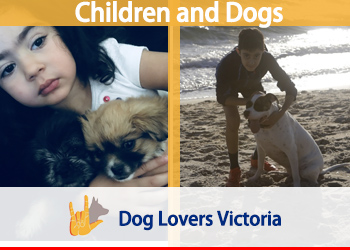
Stand up and stand still. Tell your child: “Do not run up to a dog. Keep your hands at your sides, and let the dog (who will hopefully be on a leash) come up to you and sniff your legs.” It seems natural to want to get on the dog’s level by stooping down or sitting on the floor. But personally, I would not want my child face-level with a dog that hasn’t proven itself trustworthy around children. Children should be taught to remain standing, stay still, and let the dog investigate by sniffing, and then the child should wait for the dog’s owner to initiate petting. It seems to be human nature to want to reach one’s hand toward a dog, but some dogs might find this threatening. Watch the dog’s tail. “If his tail is standing straight up, or if you notice his ears are back or the fur on the top of his back is standing up, then you know he is not yet sure if YOU are friendly and you should not try to pet him.” Remember, ask the owner “Is it safe to pet your dog?” Keep away from a stray. Instruct your child never to approach or try to pet a stray dog. Words to use: “If you see a dog that is not on a leash or not with a person, do not run toward it or try to pet it. The dog could have bad germs or bad behavior that would harm you.” It is behind a fence for a reason. Teach your children never to put their fingers or hands inside of a fence where a dog is guarding someone’s property. Explain that some people have dogs to do a job, protect the yard, and that these dogs may not behave the same as your family pet. Never try to make friends with a dog guarding property or its food. Let the dog know in dog language, that you do not want to fight with it. If a dog seems to be mean, do not look it straight in the eyes, it may think you are challenging or “testing” it. Various child safety websites recommend that children be told to back away from the dog slowly; “do not run because this might make it want to chase you.” Remember, the best way to avoid getting into a fight with a dog is to never approach a stray dog and always ask the owner’s permission before making friends with the dog. Teaching Your Child How to Handle Pets

In-home training is recommended for owners who prefer the convenience of training their dog in their home. This is especially helpful for clients who have children or multiple dogs to…
Read more ⟩An Important Reminder… Many problem behaviors we see in mature dogs develop from a lack of socialization and preventative work done early on. These problems are often not visible when your dog is still a puppy…
Read more ⟩Purchasing a new dog is a very exciting experience, and deciding which pup is the perfect fit for your home can prove an extremely difficult process. There are a wide variety of breeds from which to choose
Read more ⟩